
Pride Month is a time to celebrate the LGBTQIA+ community, and for the all of us at Reproductive Science Center of the San Francisco Bay Area to reaffirm our pledge: that every person who wants to build a family deserves expert care to do it. We’ve been partnering with LGBTQIA+ individuals and couples since 1983—long before it was common—and the options available today are more comprehensive, and more covered by insurance, than ever before.
“We don’t define families—we help create them,” shares Ravi Agarwal, M.D. “That’s been true at RSC since the beginning, and it’s what guides every consultation, every treatment plan, and every relationship we build with our LGBTQIA+ patients. If you have questions about what’s possible for your family, we’d love to be the team you ask.”
California SB 729 and what it means for LGBTQIA+ patients
If you have health insurance through a large employer in California, something significant changed at the start of 2026. Senate Bill 729 (SB 729) went into effect January 1, 2026, requiring fully insured large group health plans—those with 100 or more employees—to cover infertility diagnosis and treatment, including in vitro fertilization (IVF).
What makes this law particularly meaningful for LGBTQIA+ patients: it explicitly prohibits discrimination in fertility coverage based on sexual orientation, gender identity, marital status, and family structure. Coverage cannot be denied because of how you’re building your family. The law broadens the definition of infertility to include non-medical situations—meaning same-sex couples and single parents by choice qualify, not just those with a clinical infertility diagnosis.
Here’s what’s covered under qualifying plans:
- Infertility diagnosis and treatment, including IVF
- Up to three completed egg retrievals per policy
- Unlimited embryo transfers, per ASRM guidelines
- Medically necessary fertility preservation
- Diagnostic testing and monitoring
A few important caveats: SB 729 applies to fully insured large group plans. It does not apply to self-funded plans, small group employers (fewer than 100 employees), or religious organizations. California state employees covered by CalPERS will see coverage begin July 1, 2027. If you’re not sure whether your plan qualifies, our team can help you figure it out—that conversation is part of what we do.
What treatment options are available for LGBTQIA+ family building at RSC?
LGBTQIA+ patients at RSC have access to the full range of reproductive treatments, to help all individuals and families. Options include:
- Intrauterine insemination (IUI) with donor sperm — typically the first-line option for those planning to carry using donor sperm.
- In vitro fertilization (IVF) — including intracytoplasmic sperm injection (ICSI), preimplantation genetic testing (PGT), and frozen embryo transfer.
- Reciprocal IVF (co-IVF) — one partner provides the eggs; the other carries the pregnancy. One of the most meaningful ways both partners can participate biologically.
- Donor egg — RSC maintains one of the largest in-house, multi-ethnic egg donor registries in the Bay Area, alongside access to leading egg banks.
- Donor sperm — anonymous or known donors; our team guides you through the selection and screening process.
- Working with a gestational carrier — RSC works with reputable surrogacy agencies like the Center for Surrogate Parenting and has established relationships with experienced reproductive attorneys and psychologists to support the full process.
- Fertility preservation for transgender individuals — egg freezing or sperm banking before gender-affirming hormone therapy or surgery.
What is reciprocal IVF?
Reciprocal IVF—sometimes called co-IVF—is a treatment option for couples where one partner provides eggs and the other carries the pregnancy. The egg provider goes through an IVF stimulation cycle; the eggs are fertilized with donor sperm to create embryos; one embryo is then transferred to the carrying partner’s uterus. Both partners are biologically part of the pregnancy—one genetically, one as the person who carries and delivers.
RSC has extensive experience with reciprocal IVF and strong success rates with IVF cycles. If this is part of your plan, your physician will walk you through what each phase involves and what to expect at your consultation.
What will my treatment plan look like?
Every plan starts with a consultation with one of our specialists. Your physician will review your medical history, learn your family-building goals, and build a personalized diagnostic and treatment plan.
Some things worth thinking about before that first appointment:
- If you’re planning to carry: Who will provide the eggs—you, your partner, or a donor? Will you use an anonymous donor or someone you know?
- If you’re planning to work with a gestational carrier: Do you have someone in mind, or will you work with an agency? Who will provide the eggs and sperm?
- If you’re pursuing treatment as a solo parent: What donor options—sperm, egg, embryo—fit your situation?
There’s no single right answer to any of these. The consultation is where you work through them with a physician who has been doing exactly this for decades.
Start with a $99 Fertility Check
Not ready for a full consultation? The RSC Fertility Check is a low-barrier starting point.
For $99, the checkup includes bloodwork assessing anti-Müllerian hormone (AMH), FSH, and estradiol (E2)—the core markers of ovarian reserve—plus a transvaginal ultrasound. It’s available to patients ages 21–44 and requires no referral. One of our physicians reviews your results and follows up directly.
For LGBTQIA+ individuals who want to understand their fertility before committing to a full treatment plan, it’s often the right first step.
Fertility Equity™ care—what it means for you
Our care teams are Fertility Equity™ certified, which means our team is trained to provide culturally competent, inclusive care for all communities—including those who have historically faced barriers to reproductive healthcare. That shows up in how we communicate, how we build treatment plans, and how we show up for every patient who walks through our doors.
What legal considerations should LGBTQIA+ families know about?
Family-building law is nuanced, particularly when third-party reproduction is involved, and California law has specific requirements that vary by treatment type. We strongly recommend consulting with a reproductive attorney before beginning any treatment that involves a gestational carrier or donor.
Our team can provide referrals to experienced reproductive attorneys and psychologists who specialize in LGBTQIA+ family building. Legal counsel is especially important for gestational carrier arrangements—proper contracts protecting all parties need to be in place before any embryo transfer.
Frequently asked questions
Yes. SB 729 explicitly extends coverage to LGBTQIA+ individuals and couples by broadening the definition of infertility to include non-medical situations—meaning coverage cannot be denied because you don’t meet a traditional clinical infertility definition. It applies to fully insured large group plans (100+ employees) renewing on or after January 1, 2026. If you’re unsure whether your plan qualifies, our team can help you review your benefits.
Yes. Fertility preservation before gender-affirming hormone therapy or surgery is something our care team navigates regularly. Egg freezing and sperm banking are both available, and coming in early gives you the most options. No referral is required to schedule.
Yes—and it’s not recent. RSC has been actively serving LGBTQIA+ individuals and couples since 1983. Our staff is certified through Family Equality’s Open Door Training Program in LGBTQIA+ 101 and Trans Fertility Considerations. Inclusive language is used in all our patient paperwork and consents. You won’t need to explain the basics at your consultation.
No. SB 729 specifically broadens the definition of infertility to include those who cannot conceive due to non-medical reasons—including same-sex couples and single parents by choice. If your plan qualifies under SB 729, you don’t need a clinical infertility diagnosis to access covered fertility services.
We have options. RSC offers financing through CapexMD, discount programs, and access to research studies and clinical trials that may reduce treatment costs. A financial counselor on our team will review what’s available for your situation at no cost to you.
Whether you’re just beginning to explore your options or ready to schedule your first appointment, our team is here. Have questions about LGBTQIA+ family building or your SB 729 coverage? Schedule a consultation with RSC—or start with a $99 Fertility Check.
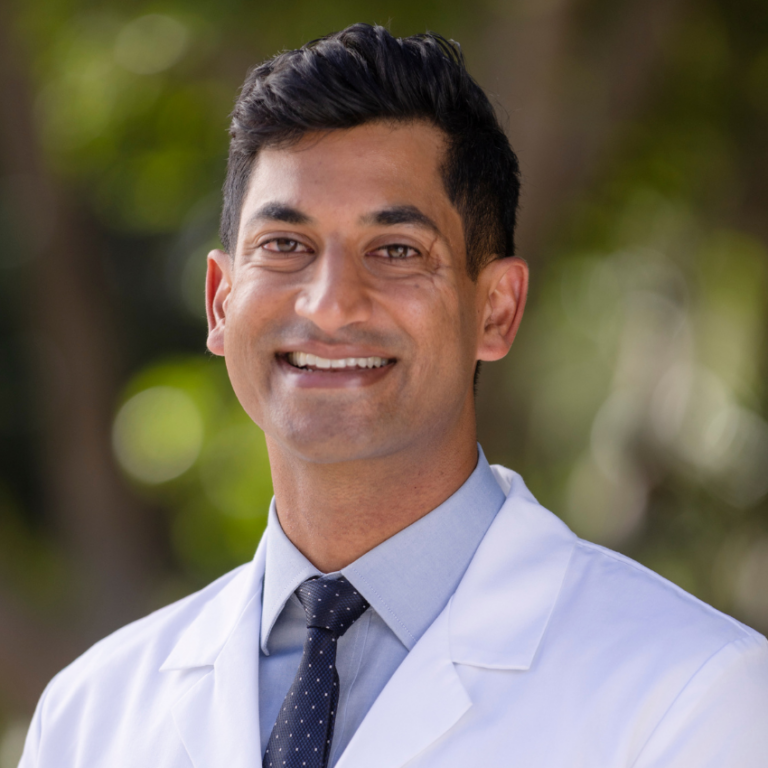
Ravi Agarwal, M.D.
Ravi Agarwal, M.D., is honored to serve the San Francisco Bay Area community he calls home. He values RSC’s patient-centered approach and commitment to innovation in fertility treatment.