
Uterine fibroids (leiomyomas) are one of the most common, and often underdiagnosed, conditions affecting reproductive health. They’re found in roughly 5 to 10 percent of infertility evaluations, and for many patients, they’re a significant factor that goes unaddressed for years. At Reproductive Science Center, we provide comprehensive fibroid evaluation and fertility treatment. And as of January 1, 2026, California’s SB 729 fertility law may mean your insurance covers more of your fibroid testing and infertility care than you’d expect.
“The evaluation for uterine fibroids is generally straightforward,” shares Laura Eisman, M.D., fertility specialist at RSC’s Oakland and San Ramon locations. “Some patients may spend years wondering why things aren’t working, while fibroids were part of the answer the whole time. We’d rather find out early.”
What are uterine fibroids?
Uterine fibroids, also called leiomyomas, are noncancerous growths that develop from the muscle of the uterus. Fibroids vary in size, number, and location, and those factors drive nearly everything about how—and whether—they cause infertility, heavy periods, pelvic pain, or pregnancy complications.
Fibroids affect as many as 3 in 4 people with a uterus by age 50. Black women are disproportionately impacted: estimates suggest 8 in 10 Black women will develop fibroids, often earlier in life and with more severe symptoms like heavy menstrual bleeding and anemia. That disparity is a health equity issue, and one that early fibroid evaluation and access to fertility care can meaningfully address. At RSC, we’re committed to providing that access.
How fibroids affect fertility: location is everything
The relationship between fibroids and fertility is nuanced. Not all fibroids cause infertility. The determining factors are fibroid size, number, and—most critically—location relative to the uterine cavity.
- Submucosal fibroids develop just beneath the uterine lining, protruding into the cavity. These have the greatest fertility impact—they reduce implantation surface area, alter the uterine environment, and are associated with higher rates of early miscarriage. Removal (hysteroscopic myomectomy) is recommended before attempting conception in most cases.
- Intramural fibroids develop within the muscular wall. Evidence of impact on fertility is mixed—smaller fibroids that don’t distort the uterine cavity are less likely to require treatment, while larger intramural fibroids may affect implantation rates and IVF outcomes. The clinical decision is made case by case.
- Subserosal fibroids grow on the outer surface of the uterus, away from the cavity. They are less likely to directly affect implantation, but can cause significant symptoms, including pelvic pressure, pain, and urinary frequency, and may warrant removal if symptoms are severe.
What SB 729 means for fibroid diagnosis and treatment
California’s Senate Bill 729 (SB 729), effective January 1, 2026, requires fully insured large-group health plans to cover infertility diagnosis and treatment—this includes evaluation of conditions like uterine fibroids that contribute to infertility and pregnancy loss.
For many patients, this means the diagnostic infertility workup that identifies fibroids, including transvaginal ultrasound, sonohysterogram (saline infusion sonography), and hysteroscopy, may be covered under your plan, alongside fertility-preserving fibroid treatment options. SB 729 also explicitly prohibits discrimination based on sexual orientation, marital status, and family structure.
A few important caveats: SB 729 applies to fully insured large-group health plans (100 or more employees) renewing on or after January 1, 2026. Self-funded plans and small employers are not covered. Our team can help you determine whether your insurance plan qualifies before you begin.
Diagnosing fibroids
Fibroids are typically detected on a transvaginal ultrasound. Depending on findings, additional imaging may include a sonohysterogram (SIS), an MRI, or a hysteroscopy— a minimally invasive procedure in which a small camera is passed through the cervix into the uterine cavity for direct visualization.
Fibroid treatment options
- Hysteroscopic myomectomy—removal of submucosal fibroids through the cervix using a hysteroscope. No incisions. Strong evidence for improving implantation rates.
- Laparoscopic myomectomy—minimally invasive removal of all fibroid types using small incisions. Uterus preserved. Shorter recovery than open surgery.
- Abdominal myomectomy—reserved for larger or more complex fibroid burdens. Open surgery, uterus preserved.
- IVF—for some patients, in vitro fertilization is the recommended path, either after surgical fibroid removal or as a first-line approach. RSC has strong IVF success rates in patients who have had prior fibroid treatment.
Getting started
If you’re experiencing fibroid symptoms, trying to conceive, or simply want to understand your options before starting treatment, our team is here to help. You can schedule a consultation with RSC, check your SB 729 insurance coverage, or start with a $99 Fertility Check, which includes blood tests to check ovarian reserve and a phone consultation with one of our fertility specialists to review the results.
Frequently asked questions: Uterine Fibroids
Potentially, yes. If fibroids are contributing to your infertility, or if you’re being evaluated for infertility and fibroids are identified, the diagnosis and treatment may be covered under a qualifying SB 729 fertility insurance plan. Our team can help you understand your specific benefits before you begin.
Not necessarily. Submucosal fibroids that distort the uterine cavity should generally be removed before IVF, as evidence consistently shows they reduce implantation rates. Intramural fibroids that don’t distort the cavity are evaluated on a case-by-case basis. Your RSC physician will review your imaging and make a specific recommendation.
Heavy or prolonged periods, bleeding between periods, pelvic pain or pressure, painful intercourse, bloating, urinary frequency or urgency, constipation, and back pain. Some people have no symptoms and discover fibroids during fertility testing.
Transvaginal ultrasound is first line. Depending on results, we may recommend a sonohysterogram (saline-infused ultrasound/SIS), MRI for mapping and surgical planning, or hysteroscopy for direct visualization of the uterine cavity.
Submucosal fibroids and some larger intramural fibroids are associated with a higher risk of early pregnancy loss. Treating cavity-distorting fibroids can improve implantation and reduce miscarriage risk.
During the reproductive years, most fibroids stay stable or grow slowly over time; true spontaneous shrinkage before menopause is uncommon. After menopause, when hormone levels drop, fibroids do often shrink. Medications can temporarily shrink fibroids, but effects usually reverse when medication stops. Surgical options are definitive for removing fibroids while preserving the uterus.
Yes. Many people conceive with fibroids, especially when they do not distort the uterine cavity. If fibroids impact fertility or pregnancy outcomes, targeted treatment can improve your chances.
Medication can manage bleeding and pain, and GnRH analogs can shrink fibroids temporarily. Uterine artery embolization (UAE) and focused ultrasound are other options, but are not typically first-line for patients seeking future fertility. Recommendations are tailored to your goals.
Timing depends on the procedure and extent of surgery. Many patients wait 1–3 months after hysteroscopic myomectomy and 3–6 months after laparoscopic or abdominal myomectomy. Your surgeon will give personalized guidance.
The reasons are not fully understood, but research points to genetic, hormonal, and environmental factors, potentially including chronic stress from systemic racism, which may influence hormonal regulation and inflammation. Black women are also more likely to have fibroids diagnosed later and treated less aggressively. RSC takes this disparity seriously—if you’ve been dismissed or under treated before, we want to give you a different experience.
Yes. July is Fibroid Awareness Month, dedicated to raising awareness about how common and consequential fibroids are, and how often they go undiagnosed, particularly in communities that have faced the greatest barriers to reproductive healthcare. If you’re searching for “uterine fibroid specialist near me,” “fibroid treatment for fertility,” or “SB 729 infertility coverage,” our RSC team can help.
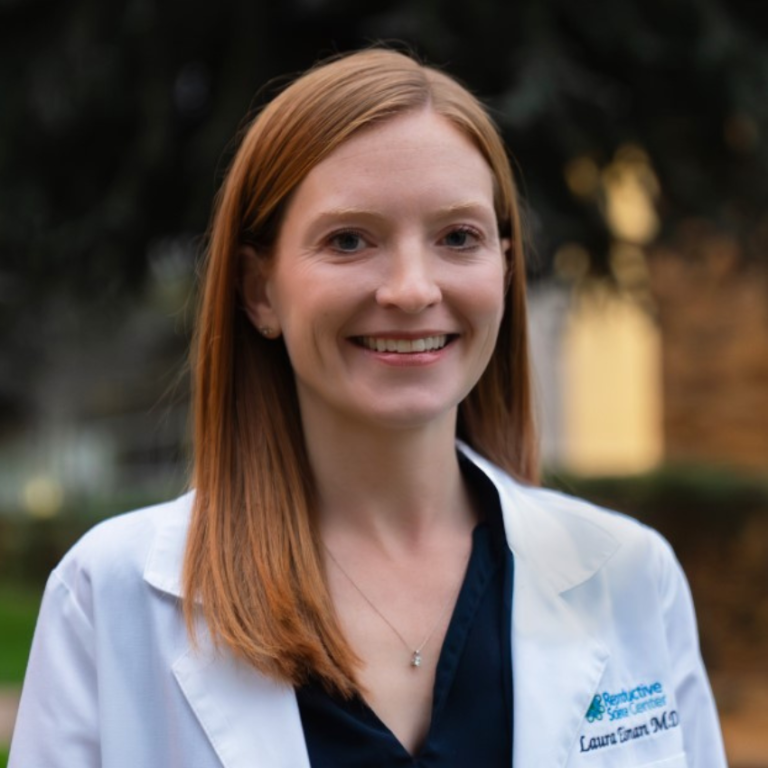
Laura Eisman, M.D.
Laura Eisman, M.D., brings a wealth of knowledge, skill, and compassion to her role as a leading reproductive endocrinologist. She completed her residency in Obstetrics and Gynecology at Abington Hospital–Jefferson Health and advanced fellowship training in Reproductive Endocrinology and Infertility at the prestigious Cedars-Sinai Medical Center in Los Angeles. She currently sees patients in San Ramon and Oakland.